
The making of neurodivergent artists

The drip paint mug can walk straight into any upscale showroom that sells art-based utilitarian items, and plonk itself in the display. It would not be stopped at the door. It would make a great corporate gift. The design of paint frozen in an act of dripping underlines such meticulous calculation and skill that it can be the subject of a design lecture at a fine arts college. This artist had designed this mug exclusively for The Indian Twist which makes a variety of items that solemnise a marriage between artistic and utilitarian value. And there is a factor adding greater value to it. The artist is Rupak Munje. A name readily recognised, Rupak is a poster boy for art by the neurodivergent, art that can share display space with art of the highest water from the neurotypical. While in the business of making and selling these products, The Indian Twist is simultaneously in the process of making Rupaks. It supports art by the neurodivergent.
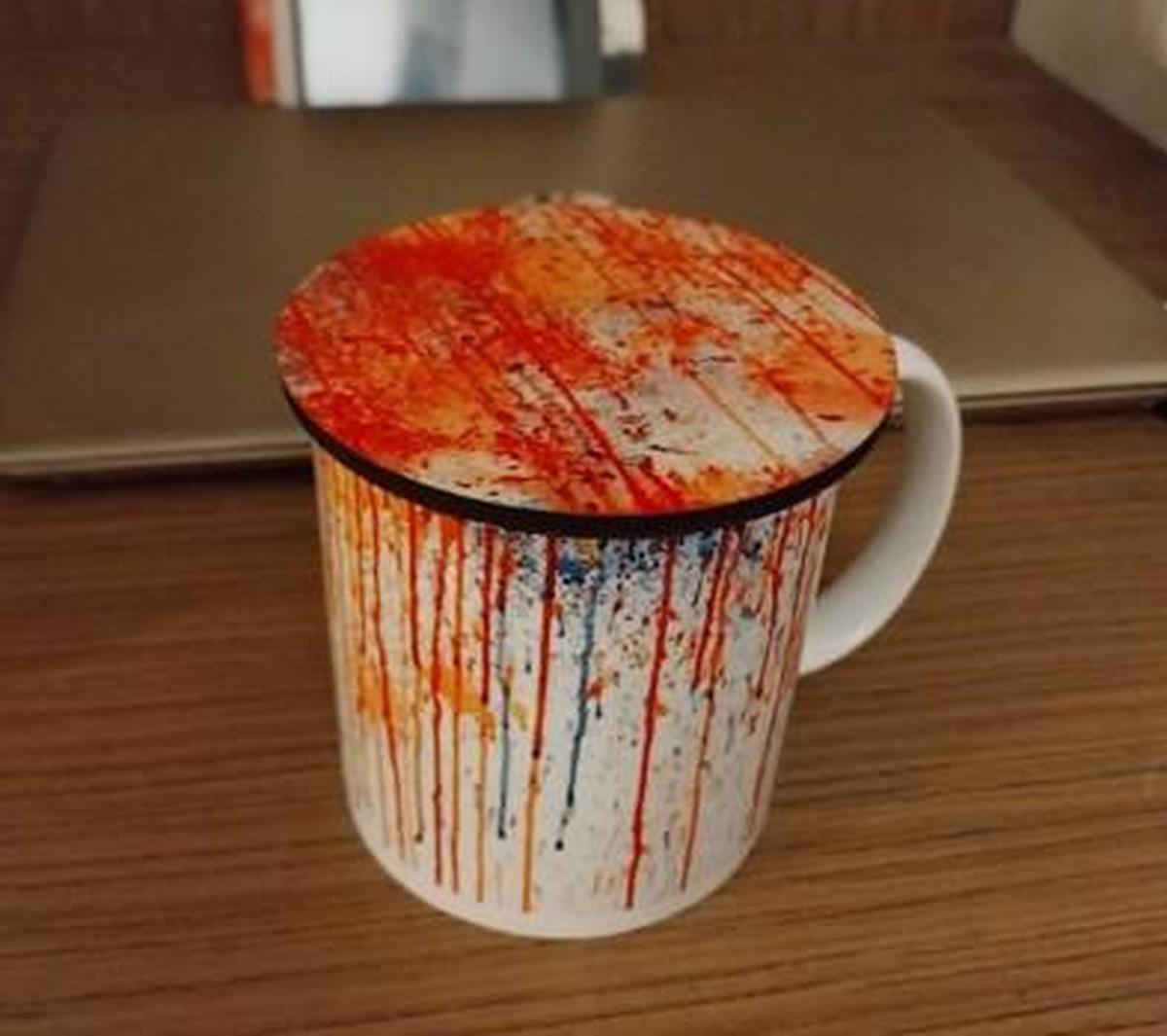
The dripping paint mug designed by Rupak Munje for The Indian Twist.
| Photo Credit:
SPECIAL ARRANGEMENT
The Chennai-based company (@theindiantwist) sells online thereby surmounting the geographical barrier to commerce .Here is a quick run of their product line — a variety of bags, cushion covers, coffee mugs, beer mugs, coasters, notebooks, artisanal fabric gift envelopes, calendars mini photo albums, aprons, fridge magnets, paper weights, wine bags and so on. There is a quirkiness to how these everyday things are designed.
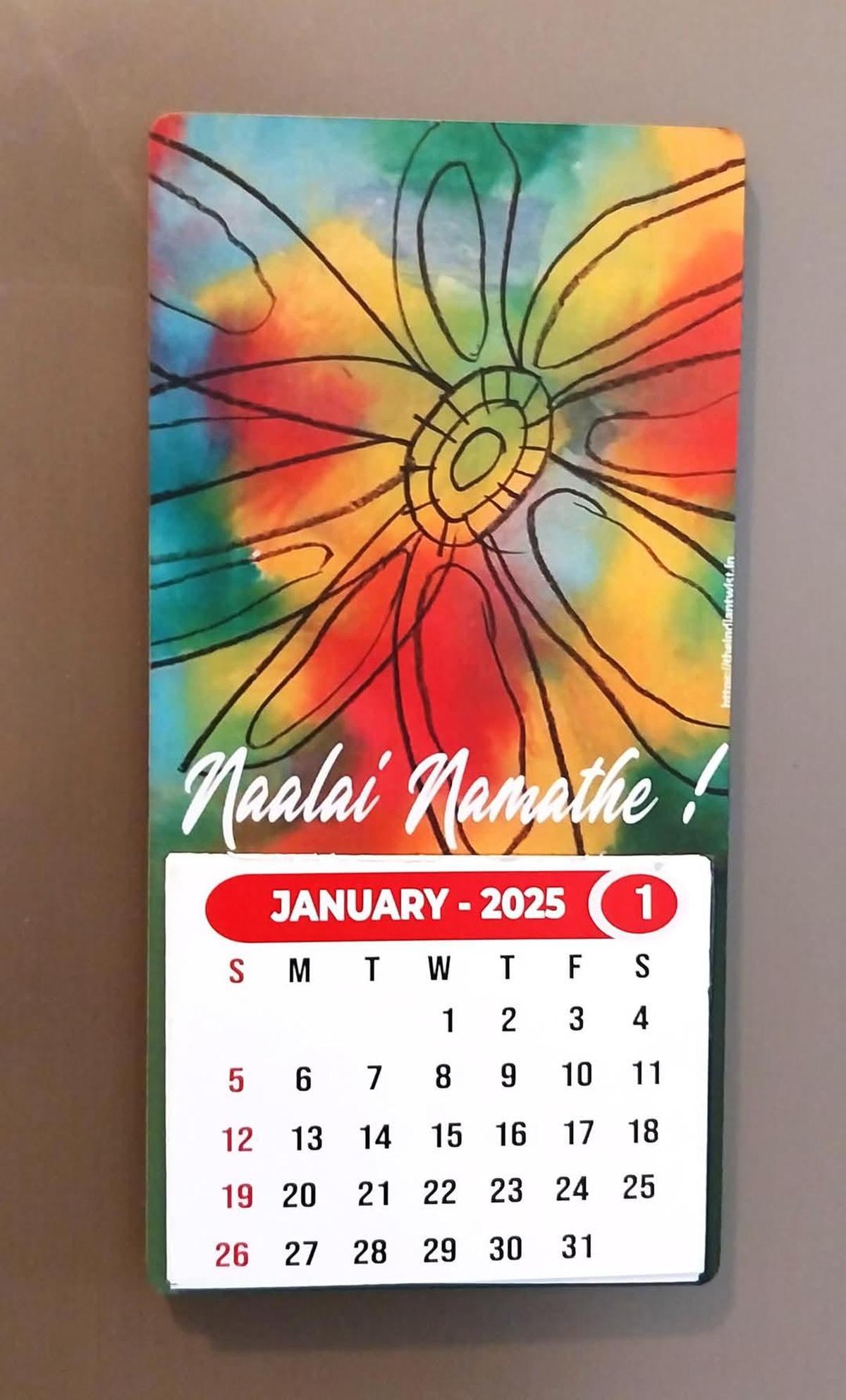
Artwork by a neurodivergent artist on a calendar designed by The Indian Twist.
| Photo Credit:
SPECIAL ARRANGEMENT
The design team at The Indian Twist works on the spontaneous artworks by children and young adults from A Brush With Art (@abwa_chennai) and CanBridge Academy (thecanbridgeacademy), “kneading” them into its products, thereby transforming these artworks into a state of saleability. CanBridge Academy provides life skill training to young adults with autism. And ABWA promotes “expression of natural art in children with special needs”.
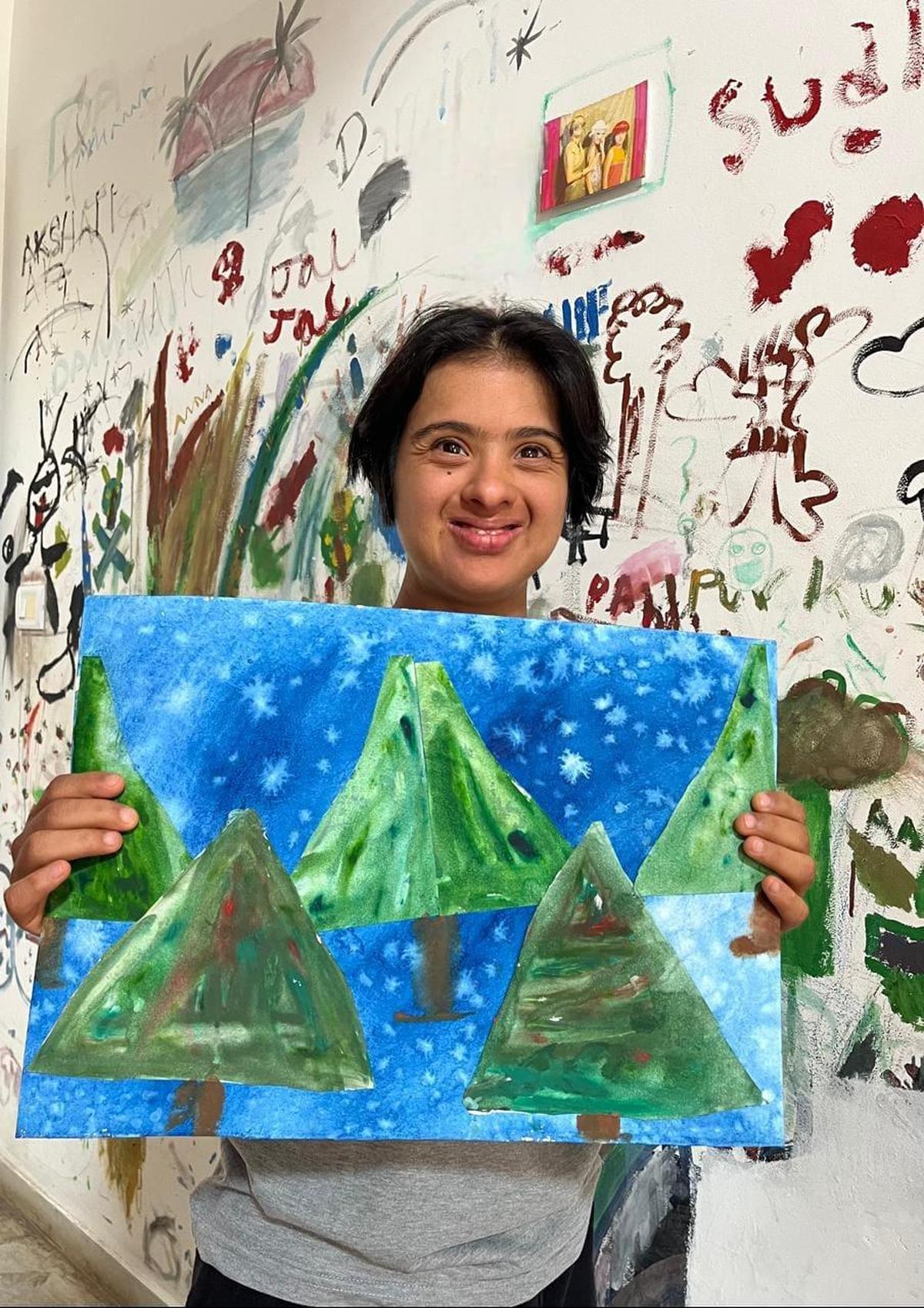
Damini at A Brush With Art.
| Photo Credit:
SPECIAL ARRANGEMENT
At The Indian Twist, the production process also supports women in shelter homes who stitch bags, earning income and gaining confidence. The residents of The Banyan (India) have a hand in some of the products designed by The Indian Twist.
Shuba Kuila, founder of The Indian Twist, notes that the final product does not obfuscate the artist’s authentic expression. For Shuba, a part of this creative work is the creation of joy. The fulfilment derives partly from the children’s delight that is evident when they spot their creations on display at events, pressing them to their chests with pride.
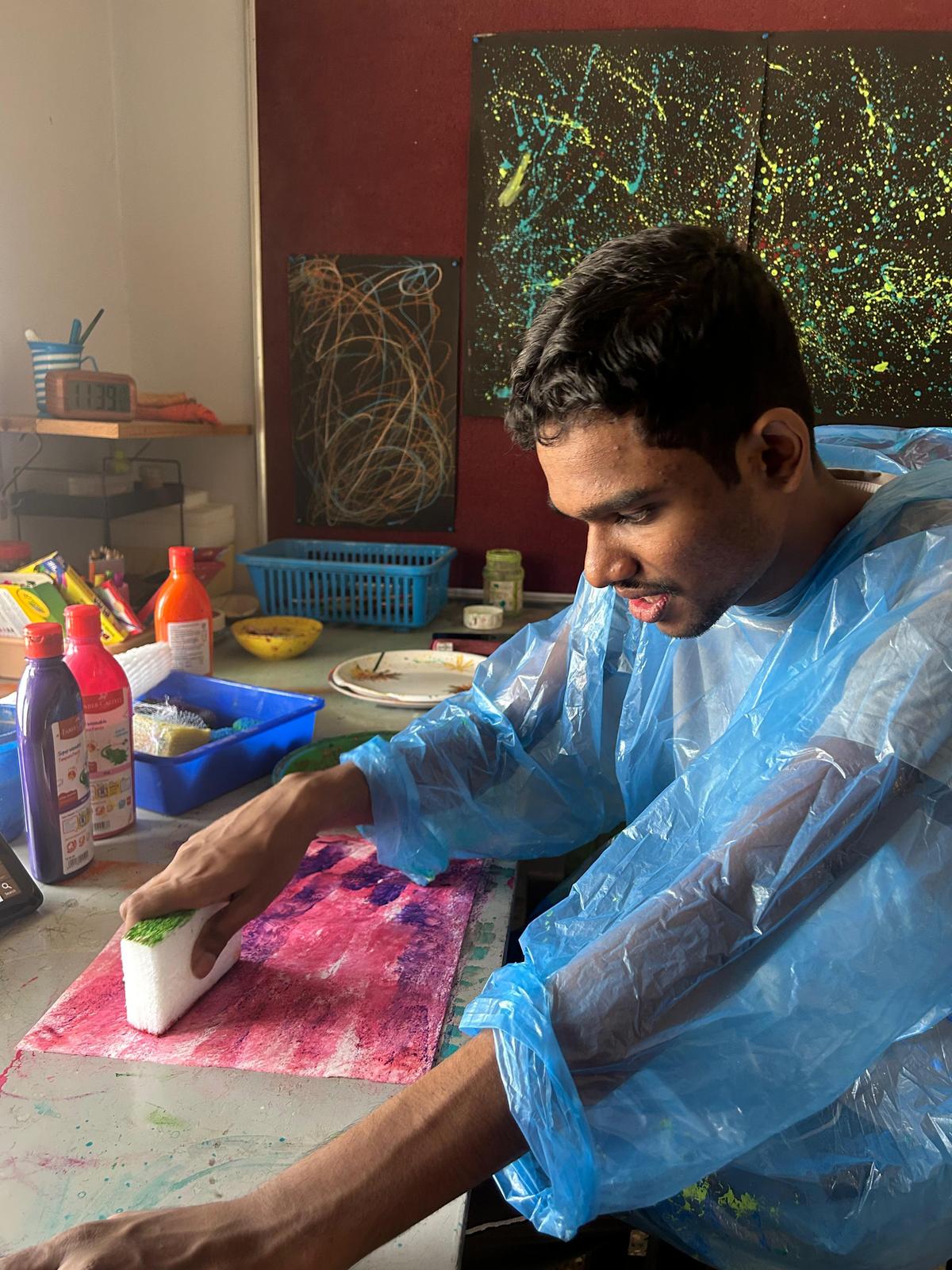
At CanBridge Academy.
| Photo Credit:
SPECIAL ARRANGEMENT
Shuba observes that The Indian Twist’s approach emphasises merit over charity, ensuring that neurodivergent artists are valued for their creativity and aesthetic contribution, not their circumstances.
Here is a peek into how these artists are made at the organisations associated with The Indian twist.
Mala Chinnappa, mother of a neurodivergent adult and a long time facilitator at A Brush With Art, begins “When a child first comes in, we begin with dry mediums like crayons. Fluid mediums can overstimulate. We simply watch them. They realise this is not a class. They are free to do what they want.”
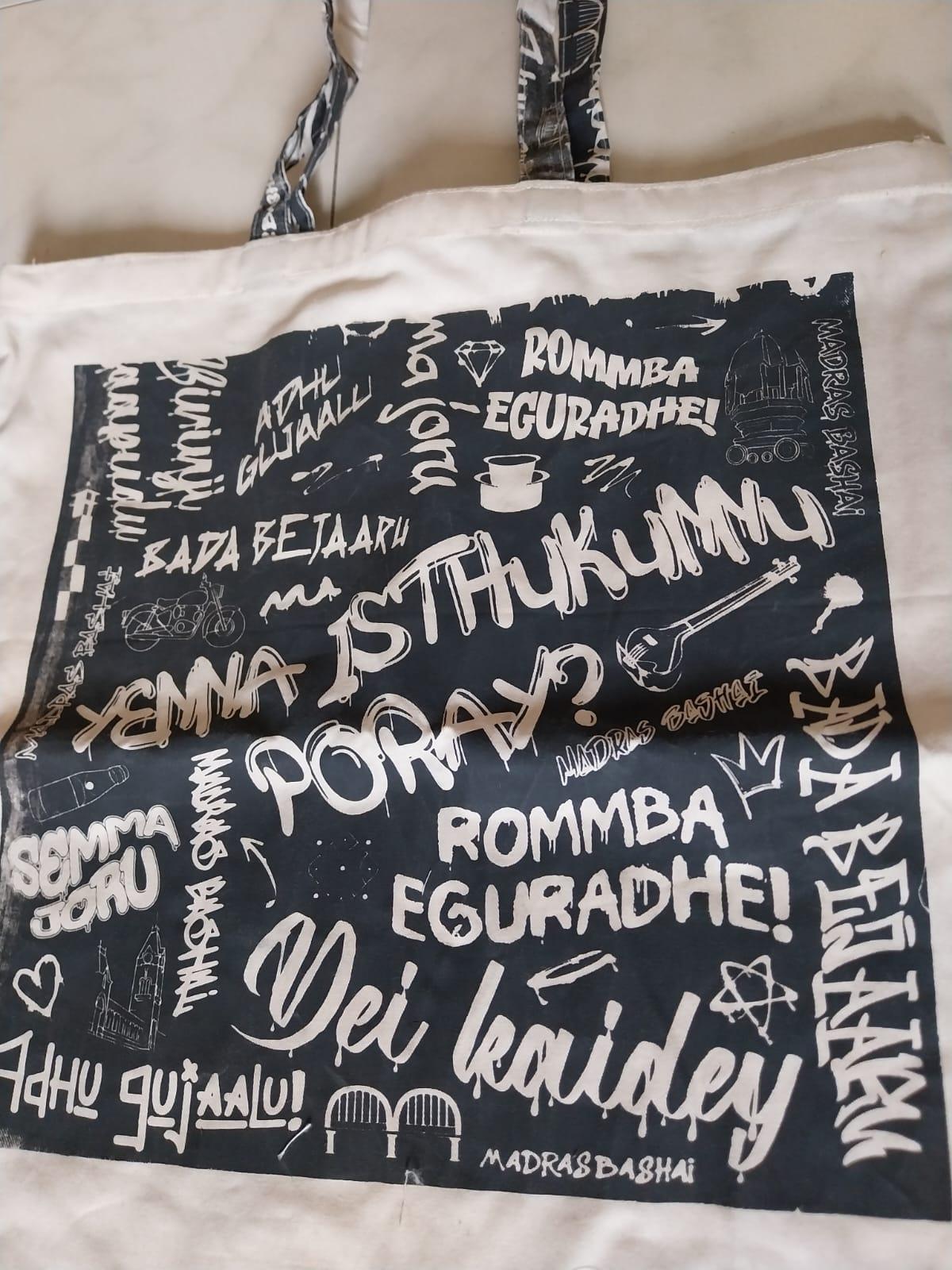
A bag from The Indian Twist which promotes art by the neurodivergent.
| Photo Credit:
SPECIAL ARRANGEMENT
The art sessions are structured around agency. One child draws buses with architectural precision but omits the driver every time. “Human beings disrupt his grid,” she explains. “So he edits them out.” Another covers sheets with a single colour until the page becomes an uninterrupted field. Some cut paper with near mathematical accuracy. Others tear it rhythmically, almost as a form of sensory release. These are data points about how each child processes the world. Over months, she observes measurable changes. Sitting tolerance expands from ten minutes to over forty. Colour choices shift from impulsive to deliberate. Compositions gain structure. Impulsivity reduces. Confidence becomes observable rather than assumed.
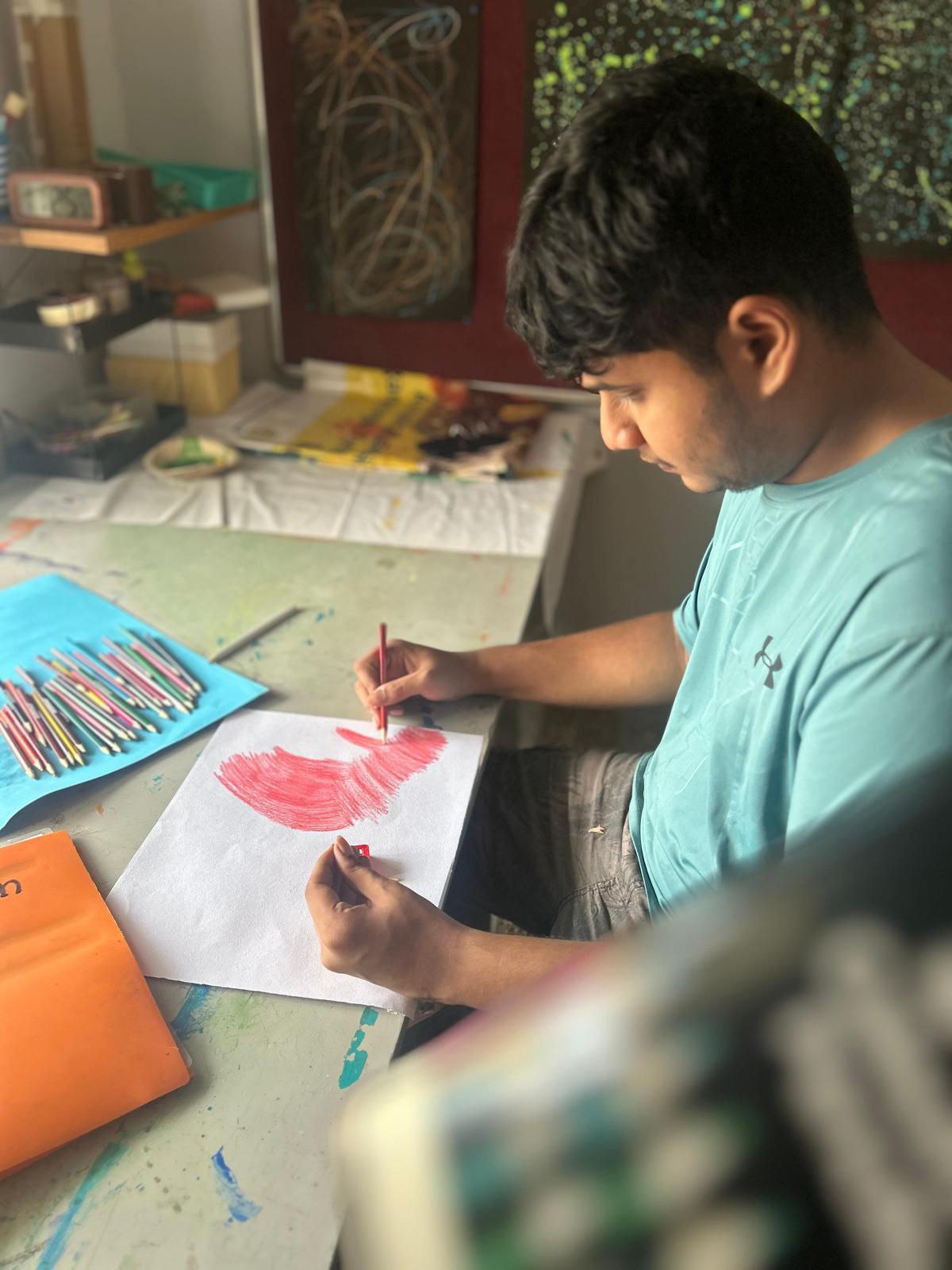
At CanBridge Academy.
| Photo Credit:
SPECIAL ARRANGEMENT
At The CanBridge Academy, co-founder Kavitha Krishnamoorthy has worked with hundreds of neurodivergent individuals across ages. Patterns, she says, are often their preferred language. Visual patterns, musical rhythms, repetitive motions are not signs of monotony but anchors for regulation. “Even finger painting becomes movement,” she explains. “Sweeps, arcs, repetitions. Their body leads the art, not the other way around.”
She cautions against reading emotions through colour choices, an interpretation common in neurotypical frameworks but inaccurate here. Emotional communication is frequently physical rather than symbolic. A child who arrives distressed may pound clay until his system stabilises. A young adult plays a xylophone with rapid beats when excited and slow, spaced notes when low. Emotion is expressed through speed, pressure, repetition, and bodily rhythm.
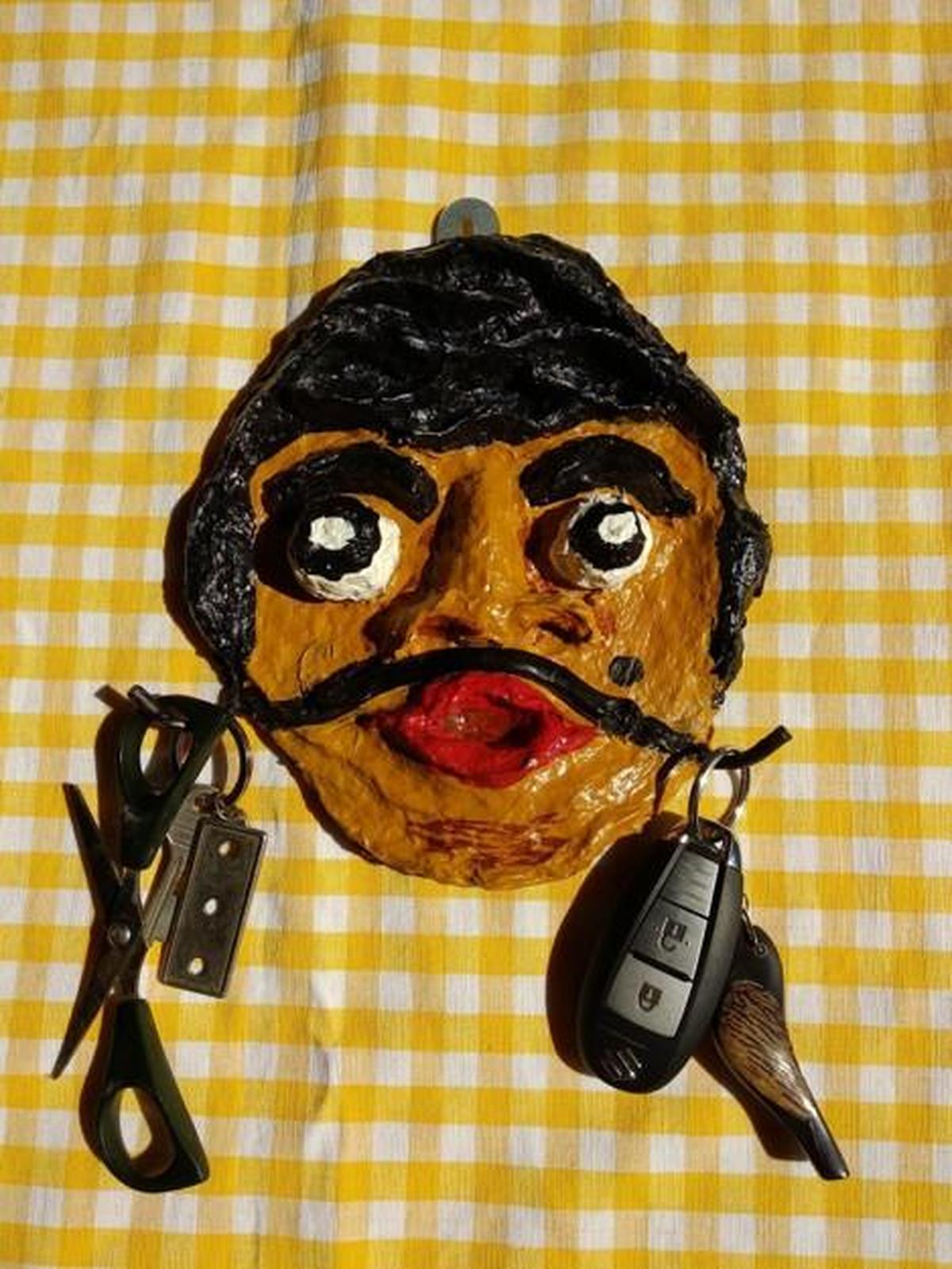
A fridge magnet designed by The Indian Twist which supports art by the neurodivergent.
| Photo Credit:
SPECIAL ARRANGEMENT
Contrary to stereotypes, attention is rarely the concern. What disrupts focus is not the child but the instruction. “They focus intensely,” she says. “The problem begins only when adults impose structure or when the task becomes monotonous.”
Across weeks and months, the changes are consistent. Restlessness diminishes. Emotional regulation improves. Trust widens. Independence builds. Over time, a recognisable artistic identity emerges, not shaped by imitation but by sensory accuracy.
Published – December 06, 2025 08:28 am IST