
Delhi can stop blaming farm fires for its pollution woes
The paddy harvesting season for 2025 officially ended on November 30. Punjab and Haryana recorded a 90% reduction in stubble burning incidents this year compared to 2021. In fact, farm fires in the two States declined to their lowest levels in five years in 2025.
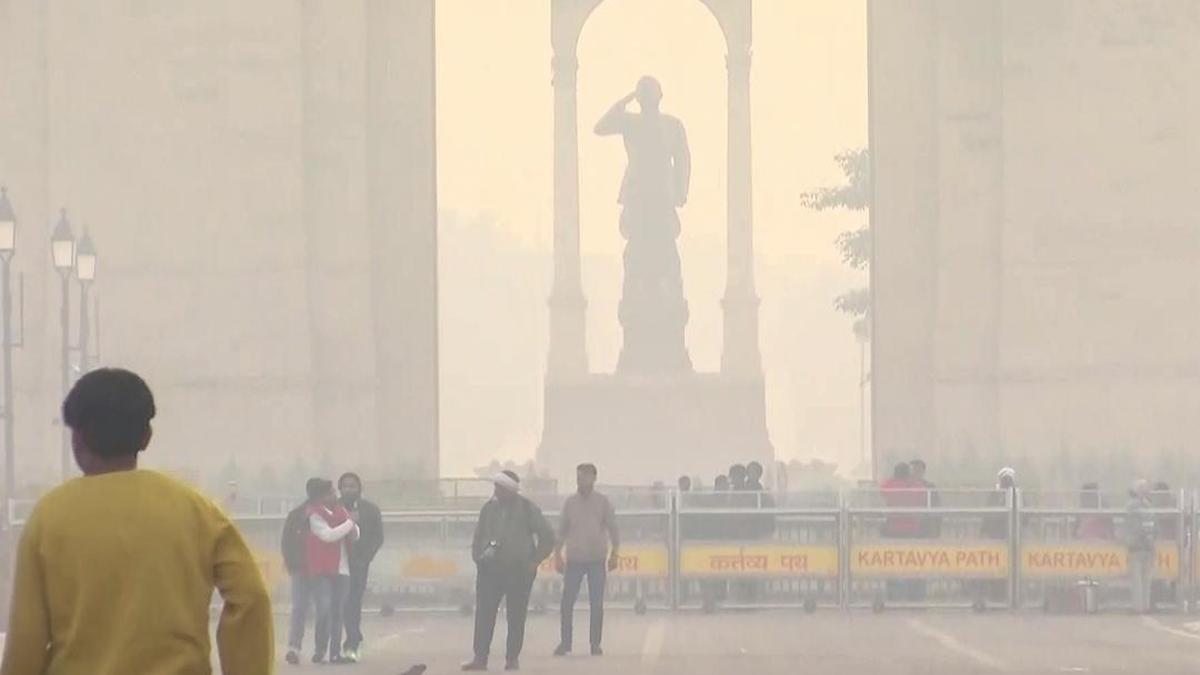
However, pollution levels in Delhi remained stubbornly high, triggering protests last month. This disparity shows that local sources remain the primary driver of the capital’s persistent pollution crisis.
Notably, the Supreme Court on Monday suggested that farmers could not be made scapegoats for air pollution in the national capital. The Court also asked why blue skies were visible during the pandemic years when stubble burning was relatively high and vehicles were off the roads.
The Centre for Science and Environment (CSE)’s assessment of Delhi’s early winter trends and annual air quality confirms this reality: Delhi and the National Capital Region (NCR) can no longer hide behind the smokescreen of farm fires.

The incidence of crop burning has substantially reduced in Punjab and Haryana this year, partly due to the massive floods in Punjab during the monsoon. In the October-November period, the daily contribution of farm fires to pollution levels in Delhi mostly remained below 5%, or between 5-15% for a few days and peaked at 22% only between November 12 and 13.
The chart below shows Delhi’s Air Quality Index (left axis) versus contribution of farm fires (right axis: %) in the October-November period
While the reduced fires prevented extreme spikes, the Air Quality Index (AQI) stayed in the ‘very poor’ to ‘severe’ range for almost the entire month of November, indicating the significance of Delhi’s local, year-round sources of pollution.
Importantly, PM 2.5 remained the prominent pollutant for 34 days in the October-November period. Data show that the air is toxic to breathe not just because of the increase in the levels of particulate matter but also due to the contribution of local sources.

According to the report, the daily particulate pollution spikes are closely reinforced by traffic-related emissions of both NO2 and CO, especially under low-dispersion winter conditions. Both NO2 and CO are highly toxic and harmful gases.
The chart below shows the correlation of PM,, with CO and NO, in the Nov. 21 – Nov. 28 period. In the graphs, the PM,, values are plotted on the left axis
This problem has become widespread over the years. CSE’s report noted that in 2018, about 13 hotspots were officially identified based on their pollution levels that not only exceeded the standards but also the city’s average levels. These hotspots have continued to remain extremely polluted. With an annual PM2.5 average of 119 g/m³ in 2025, Jahangirpuri is the most polluted hotspot, followed by Bawana, Wazirpur and Anand Vihar.
Over the years, several other hotspots have emerged in the city. Vivek Vihar recorded 101 g/m³ in 2025, similar to Ashok Vihar. Nehru Nagar, Alipur, Sirifort, Dwarka Sector 8, and Patparganj have all recorded more than 90 g/m³.
The chart below shows the trend in annual PM,, level among original and emerging pollution hotspots in Delhi and its surroundings
The report also noted that several NCR cities remained just as polluted as Delhi, and were often worse off. While a region-wide smog episode affected NCR towns too, Bahadurgarh endured persistent conditions, with the episode lasting 10 days. The town’s average smog intensity exceeded that of Delhi’s. This indicates that the entire region behaves as a single airshed where even smaller towns are becoming hotspots, facing equal or even greater pollution pressure.
Data suggests that Delhi is on the verge of losing its air quality gains from previous years. Between 2018 and 2020, Delhi saw a steady decline in year-on-year PM2.5 levels. However, since 2021-22, the levels have been largely elevated, and the annual average level has taken a sharp upward turn.
Charts were sourced from ‘Toxic cocktail of pollution during early winter in Delhi-NCR, a report published by the Centre for Science and Environment on December 1, 2025. The report was authored by Sharanjeet Kaur and Anumita Roychowdhury
Published – December 04, 2025 08:00 am IST