
IFFK 2025: Nishanth Kalidindi’s Theatre explores the fragile world of Indianostrum and indie cinema

If ants signify intrusion, control, and imminent violence in Vivek Shanbhag’s novel Ghachar Ghochar (2015), in Shishir Jha’s Santhali documentary on uranium-mining in Jharkhand, Tortoise Under the Earth (2022), ants speak of the displacement of the tribal villagers. In his early 20th century eponymous Expressionistic painting, Salvador Dali draws oversized ants munching on dislocated ears of wheat. Surreal meets the real to reveal deep meanings tied to Dali’s own personal fears and desires. There’s ant in the word migrant. Always on the move, driven by a purpose. Moving in a colony, it stands for hard work, diligence, resilience, wisdom, foresight and cooperation. Also, for building worlds, being displaced, rerouting and rebuilding lives.

In his sophomore Tamil feature, or rather docufiction, Theatre (2025), Puducherry native Nishanth Kalidindi resorts to the symbology of ants taking over the land left by humans — Indianostrum Théâtre was “evicted” from their White Town space last year. “Every time I visited Indianostrum, I saw ants as often as I saw artists. The theatre artists can lose their space but no one can take the ants away,” he says. Theatre had its world premiere at the prestigious International Film Festival Rotterdam (IFFR) in February and is scheduled for its Asian premiere in the Indian Cinema Now segment at the International Film Festival of Kerala (IFFK), Thiruvananthapuram, mid-December.
Kalidindi has been friends with the Indianostrum Théâtre group for a while. “It’s been a long association, and observing their lifestyle has gotten me to reflect on how these theatre artists lead their lives,” he says. The filmmaker has also produced the group’s founder the Franco-Tamilian Koumarane Valavane’s first film. Valavane, a former member of the Parisian avant-garde Théâtre du Soleil, was most famously seen playing the eponymous protagonist of Arun Karthick’s award-winning Tamil indie Nasir (2020). Puducherry’s Auroville area had already embraced Mumbai’s Veenapani Chawla’s Adishakti performance-research-based theatre laboratory since 1993, and in 2007 came Valavane’s Indianostrum Théâtre — both experimental and physical theatre; but while the former is rooted in technique and Indian traditional mythic folk forms like kalaripayattu, theyyam, etc., the latter’s intercultural and sociopolitical theatre borrows from Western dramaturgy and Tamil folk storytelling traditions.
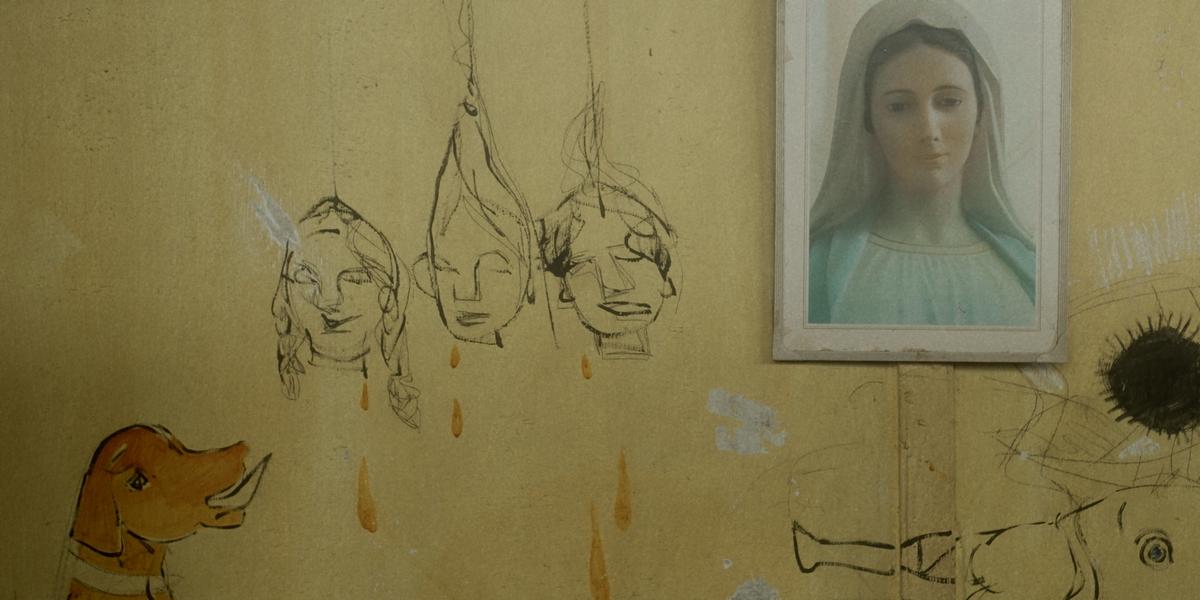
A still from ‘Theatre’.
| Photo Credit:
Barycenter Films
Kalidindi’s fly-on-the-wall observations become the Impressionistic Theatre, in which Das, a cattle farmer who aspires to be a stage actor, works with an eclectic, cosmopolitan theatre troupe. To iterate what Alfred Hitchcock said about all actors should be treated as cattle, the cattle farmer Das feels the weight of it the most. The image on the film’s poster is not of the protagonist Das but of a cow. He and his actor-colleagues are treated no better by their ill-tempered, foul-mouthed director. When the director’s tantrums unearth buried resentments among the group’s members, the play they are rehearsing threatens to come apart.

If this film were a person, it would be very moody and volatile. Kalidindi brings the narrative dissonance to his style too, in the tonality, moods, landscapes and languages, cutting in and out of conversations, to create a pastiche of discrete audio and visuals. “Technically, the approach here was to embrace aberrations like shots coming in and out of focus. The same approach was brought to the sound design and the edit. That’s why I opted to crop into certain details of certain shots, instead of going for an all-new shot every time,” he says.
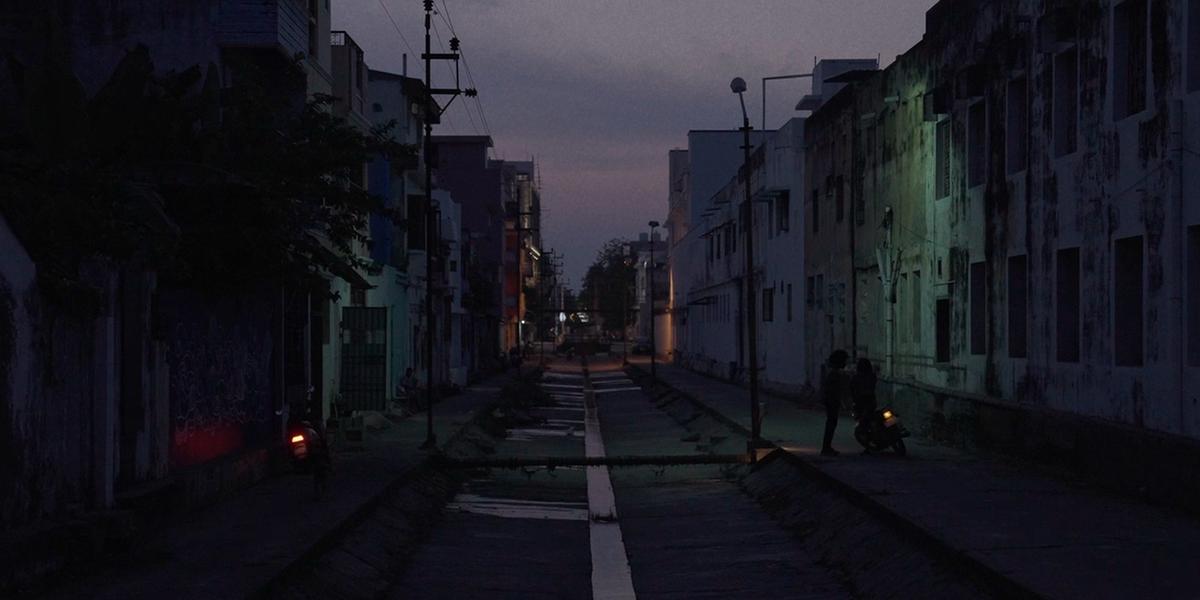
A still from the film ‘Theatre’
| Photo Credit:
Barycenter Films
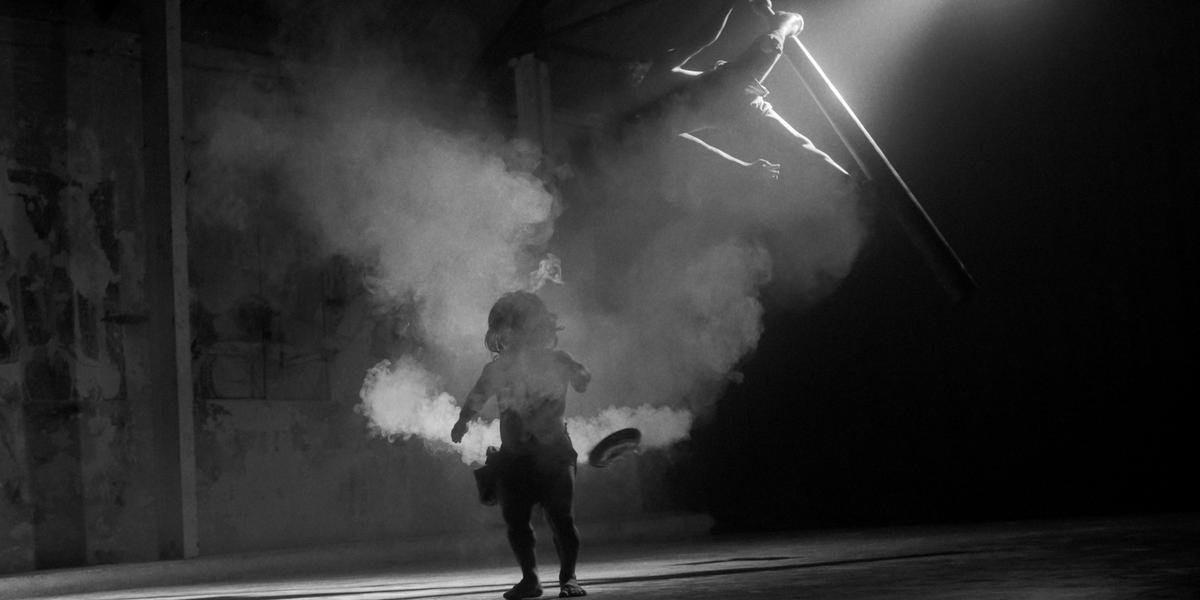
A still from the film ‘Theatre’
| Photo Credit:
Barycenter Films
This second feature is quite different from his debut Kadaseela Biriyani (2021), a Tamil revenge-themed black comedy, narrated by Vijay Sethupathi, and available on Netflix. His debut was a mix of masala and indie, comic and violent, in the realm of the likes of Super Deluxe. “We finished Kadaseela Biriyani and took it around for three years before it could see the light of day,” says the director, for whom Rotterdam was the first time he sent a film to any festival.
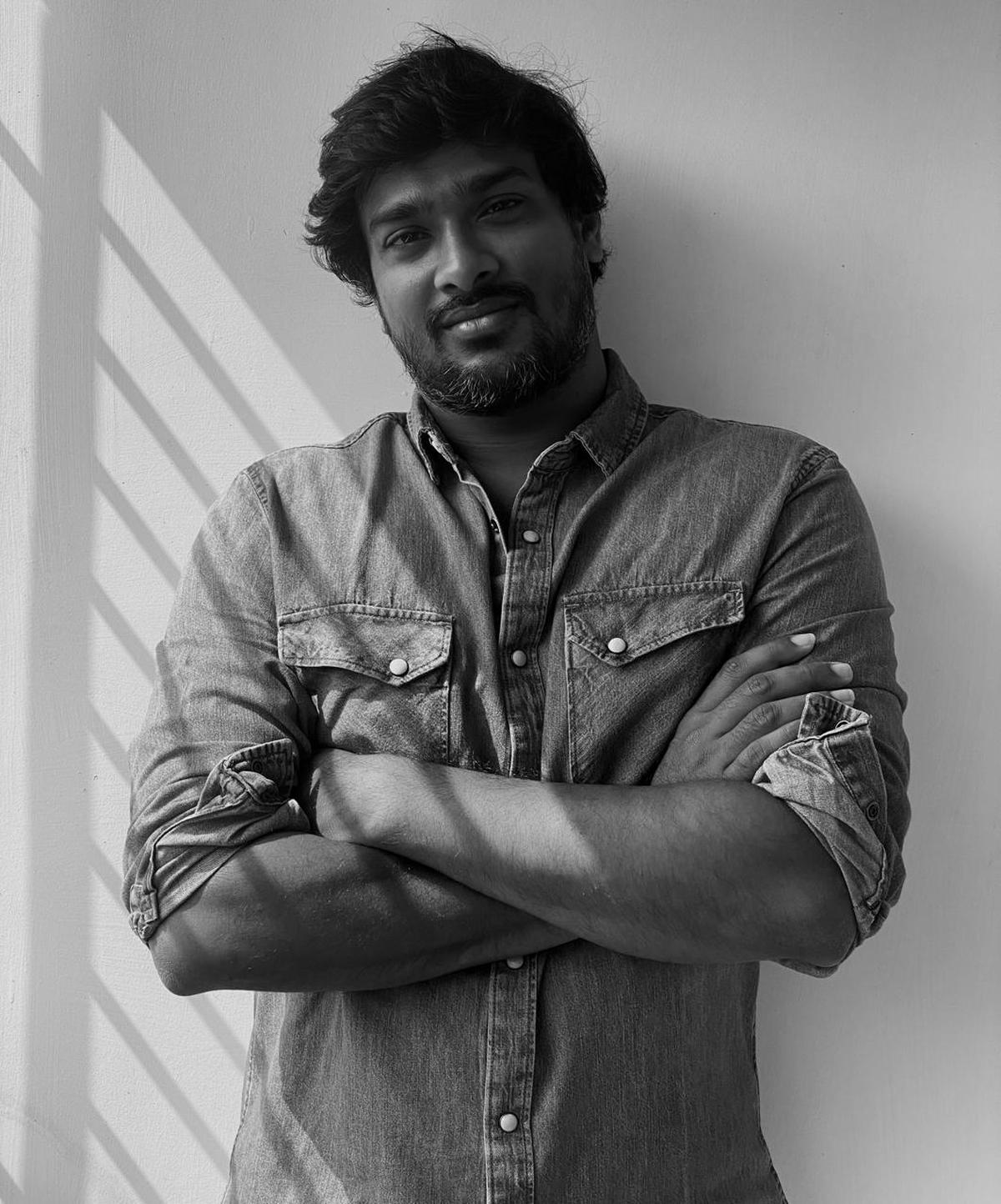
Director Nishanth Kalidindi
| Photo Credit:
Barycenter Films
Cinema goes to theatre
The literal theatre and men rehearsing for a play is a recurring theme in Malayalam indie films in the recent years. From Chavittu (2022) by Rahman Brothers Shinos and Sajas, to Anand Ekarshi’s National Award-winning Aattam (2023). And, was it because there was already a film titled Theatre in its line-up that IFFK didn’t select Malayalee filmmaker Sajin Baabu’s Rima Kallingal-starrer Theatre: The Myth of Reality (2025)?
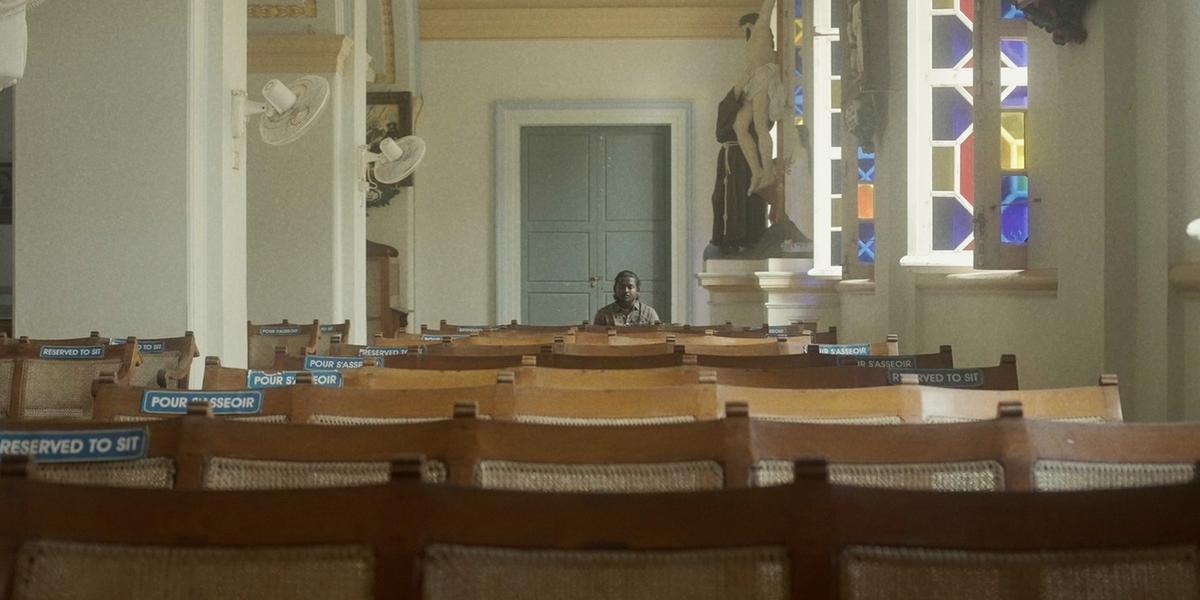
A still from the film ‘Theatre’
| Photo Credit:
Barycenter Films
Unlike the others, Kalidindi’s Theatre isn’t making an overt social commentary. “Theatre is the episode of my life when I was observing Indianostrum. For me personally, the film is a reflection of that period of my life. The artists that I had observed and chosen to film literally lived in and slept at this particular theatre while working on their plays. All I wanted was to explore their lives, and that happened to majorly take place around this space,” he says.

The character arc
In the film, a mallakhamb (ancient martial arts) artist shares the stage with a circus clown — one a traditional Indian form and the other a borrowed Western form — much like the intercultural artists of the troupe shown. Is the theatre a democratic, classless, casteless and race-less space for people like Das? “My intention is not one of social commentary,” Kalidindi says, “but only of peeping into the convergence of diverse artists in this space, a very positive and beautiful synergetic atmosphere.”
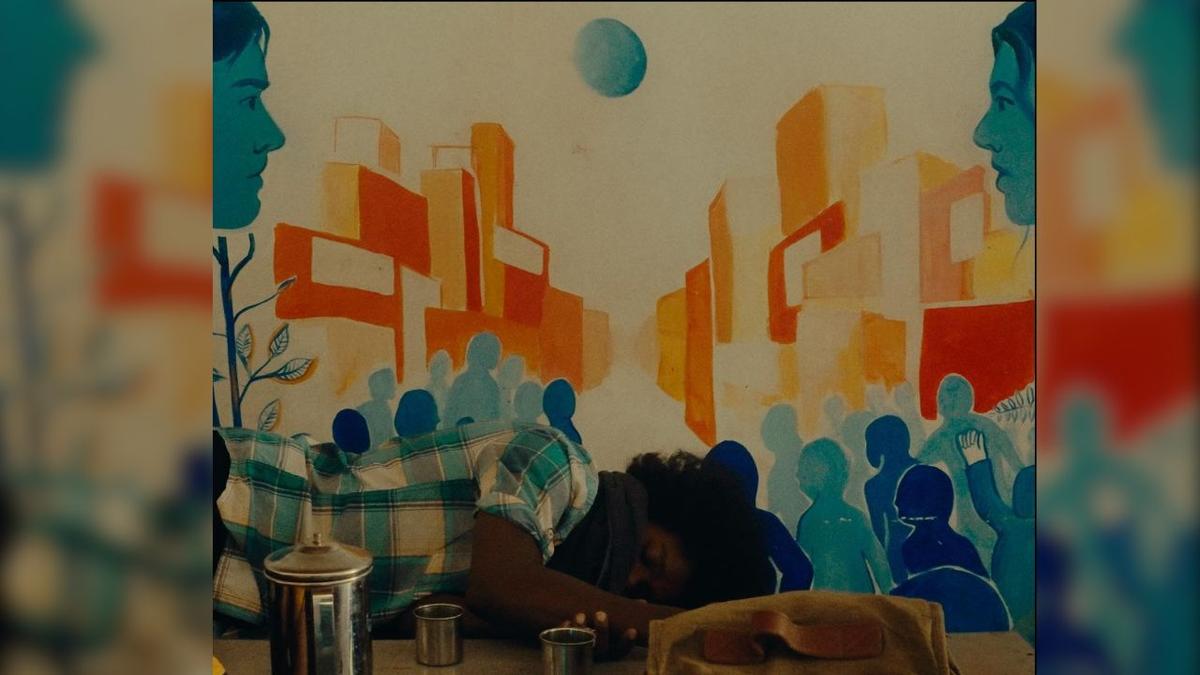
A still from the film ‘Theatre’
| Photo Credit:
Barycenter Films
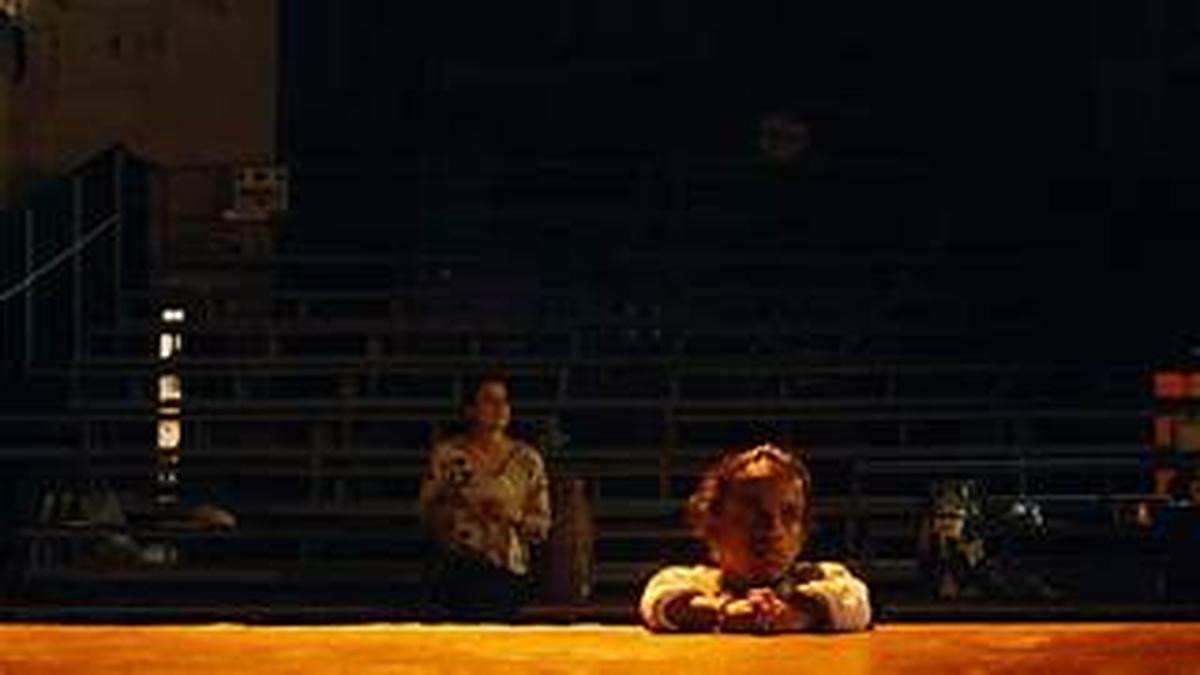
A still from the film ‘Theatre’
| Photo Credit:
Barycenter Films
In both of his films, the protagonist is a capable-of-caring soft person who has a certain vision/dream for himself, and who can get violent when required. We are drawn into their lives and yet are at an emotional remove. “I certainly gravitate towards interesting characters, people who are very normal on the outside but could have the possibility of very different psychological turmoil inside them. I am constantly seeking out the opportunity to study such people through my films. And yes, avoiding melodrama is most certainly a very conscious choice in any of my work,” says Kalidindi, who’s working on his next feature, which could be a period piece, an Indo-French film on British administrator Joseph-François Dupleix’s time in India. Conventionally, indie producers rarely participate in a film, or invest in the same filmmaker for a second time, for myriad reasons. However, this next project will also be co-produced by Thanikachalam S.A. of Bengaluru-based Barycenter Films, who says, “On Theatre, I have had the best experience of a director-producer collaboration.”

Backing indies: A contrarian view
Pune’s Film and Television Institute of India (FTII) alumnus Thanikachalam says, “India makes more than 200 indie features every year. But we hear of only around 30 films (a generous estimate). What happens to the other 170 films, most of which are debuts? And these 200 films have less than 20 repeat-producers.” He presents a contrarian view when he says co-productions aren’t required at all. “In my experience, it’s best to not have multiple domestic production companies on indie films. But it becomes a necessity to fund or complete the film, as we have a poor model of support in India for indie cinema — which is no support,” he adds.

Thanikachalam co-produced Theatre along with Kalidindi’s own production house Maestros & Panoramaas, which includes art director Neil Sebastian, composer and sound designer Vinoth Thanigasalam and co-cinematographer Hestin Jose Joseph. He evolved from being a screenwriter and creative head at production houses to starting his own indie production company, “to do exactly the kind of films that nobody else is doing.” He has also backed eclectic films, such as Maisam Ali’s In Retreat (2024), which was India’s first ever selection in the Cannes Film Festival’s sidebar ACID segment. Ali is also an FTII alumnus and Cannes Grand Prix winner Payal Kapadia’s batchmate. “I’m still the cinephile that loves arthouse and independent cinema and participates in them more closely, now as a stakeholder,” adds Thanikachalam.
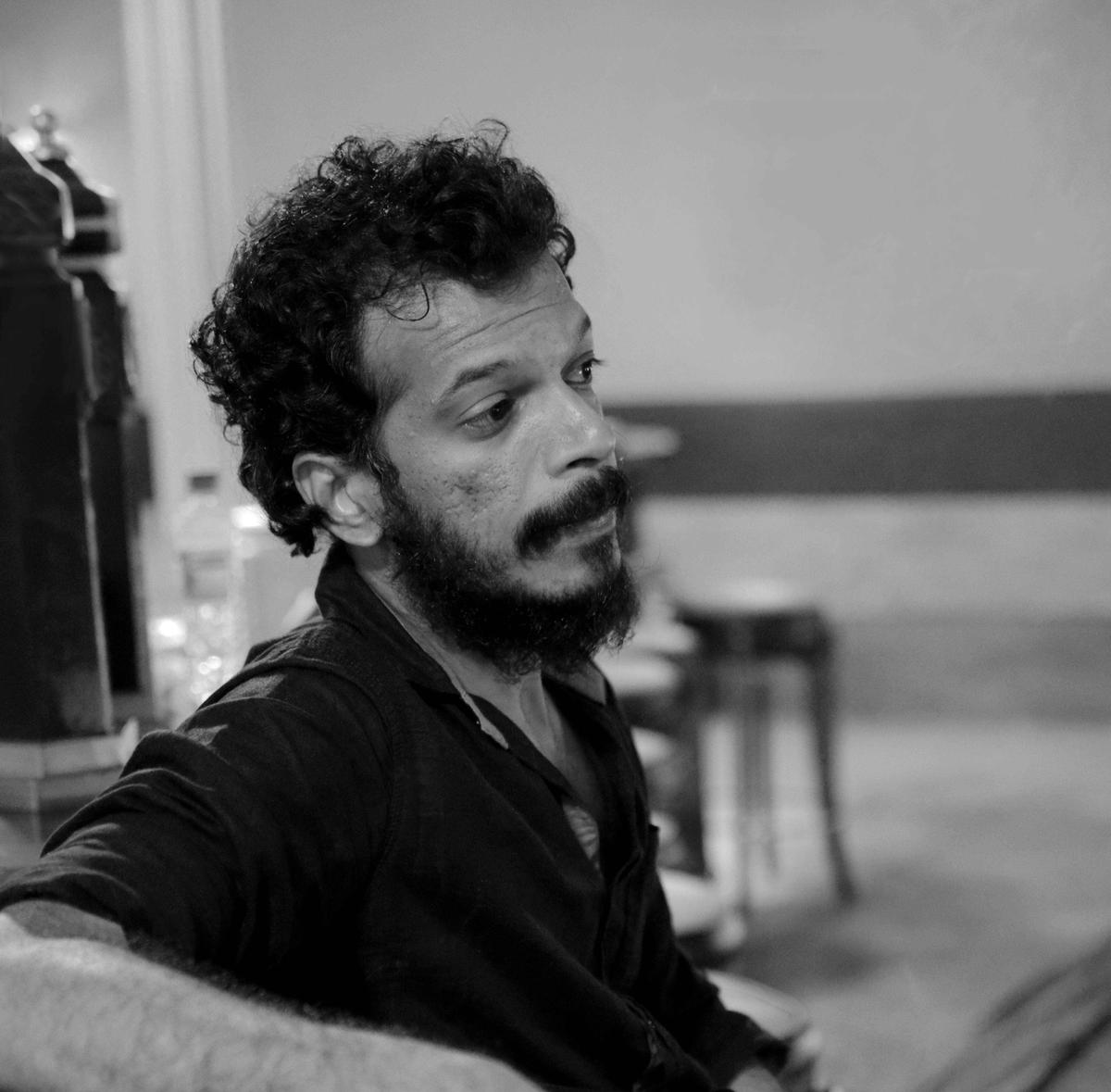
Co-producer Thanikachalam S.A., who runs Barycenter Films
| Photo Credit:
Barycenter Films
After a bunch of debut films, he is currently co-producing the “living legend” National Award-winning Kannada director Girish Kasaravalli’s 15th feature, The Sky and the Cat. “We’re still putting together all the pieces of the financing puzzle on it,” he says, adding that the start-up millionaires could adopt independent films — the legendary Iranian director Jafar Panahi has dedicated his 2025 Gotham Award wins for It Was Just an Accident, to all independent filmmakers. And, Thanikachalam quips, “we need accountability — we simply have to take a look at the line-up at (the recent International Film Festival of India) IFFI’s Indian Panorama section, and IFFI’s programming, to see how arbitrary it was. As it is with the National Awards that has been resembling the (populist) Filmfare Awards.”
Talks are being finalised right now and the film is likely to release in the cinemas in early 2026.
Theatre premieres at IFFK on December 13 (New 1 theatre at 11:45AM), there are two more shows on December 16 (Kalabhavan at 6:15PM) and 17 (Kairali at 9AM).